
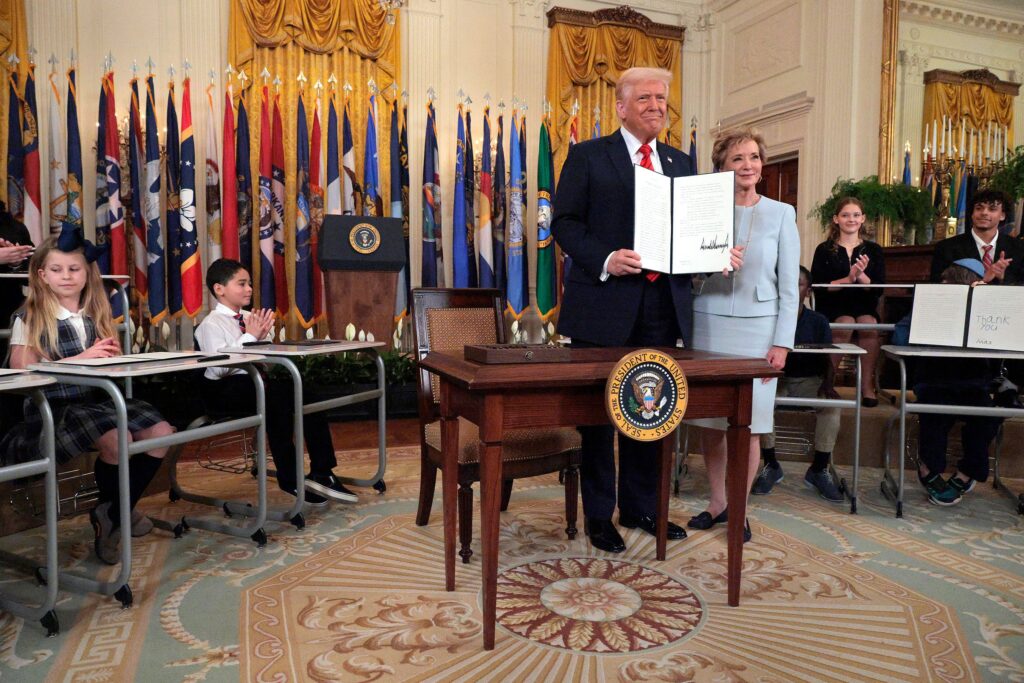

The Trump administration has announced plans to significantly restructure the U.S. Department of Education, including dismantling or downsizing several key divisions. The move signals a shift in federal education priorities and could have widespread implications for federal funding, student aid programs, and regulatory oversight.
Key Details of the Restructuring Plan
According to official statements:
- Several offices and bureaus within the Department of Education will be eliminated or merged.
- Responsibilities for student loan management, program oversight, and education research may be redistributed to other agencies or eliminated entirely.
- The administration cites a desire to reduce federal bureaucracy and streamline operations.
Implications for Students and Borrowers
1. Federal Student Aid Programs
- Programs such as income-driven repayment, Public Service Loan Forgiveness, and federal grants could face administrative delays or policy changes.
- Borrowers may need to monitor communications closely to ensure continued compliance and benefits.
2. Oversight and Compliance
- Reduced oversight of schools and institutions may impact regulations on student protections, accreditation, and accountability.
- Some programs supporting low-income students or underserved communities could be affected.
3. Funding and Grants
- Changes could affect federal grants for K-12 and higher education, potentially influencing curriculum, research, and educational initiatives nationwide.
Reactions from Education Stakeholders
- Education Advocates: Concern over the potential reduction of resources and protections for students.
- Universities and Schools: Uncertainty about federal funding and administrative support could complicate planning.
- Borrowers: Anxiety over how restructuring might affect student loans, repayment options, and forgiveness programs.
Administration’s Rationale
Officials argue that the restructuring aims to:
- Reduce federal spending on administrative overhead
- Increase efficiency by consolidating overlapping functions
- Encourage states and local authorities to take on more responsibility in education
- Limit federal regulatory reach, giving schools and universities more autonomy
Supporters claim that these changes will streamline government operations and reduce bureaucracy, while critics warn of potential negative impacts on student access and protections.
Potential Challenges
- Transition Disruptions: Shifting responsibilities may create delays in program administration and guidance.
- Legal and Policy Hurdles: Some changes may face legal challenges or require congressional approval.
- Communication Confusion: Students, parents, and institutions may struggle to understand new reporting and application procedures.
Looking Ahead
Observers note that the restructuring could reshape federal education priorities for years to come. Stakeholders are advised to:
- Stay informed via the Department of Education’s official channels
- Track updates on student loans, grants, and program eligibility
- Seek guidance from financial and educational advisors regarding policy changes
Conclusion
The Trump administration’s plan to dismantle large parts of the Education Department represents a major shift in federal education policy. While the stated goal is to reduce bureaucracy and increase efficiency, the move raises concerns about funding, oversight, and support for students and borrowers. Families, institutions, and borrowers should remain vigilant and proactive as the restructuring unfolds.